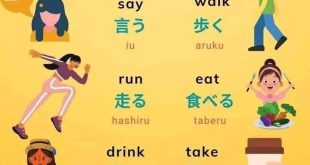
Learn Japanese
What is the difference between ます and です in Japanese?
In Japanese, both ます (masu) and です (desu) are used to convey politeness, but they serve different grammatical functions and are used in different contexts.

ます (masu)
Function: It is a verb ending used to indicate that the verb is in the polite form.
Usage: It attaches to the stem of a verb to make it polite.
For example:
食べる (taberu – to eat) becomes
食べます (tabemasu – I eat / I will eat).
行く (iku – to go) becomes
行きます (ikimasu – I go).
です (desu)
Function: It is a copula, similar to the English verb “to be.”
Usage: It is used to link a subject to a predicate, often to describe something or state existence.
For example:
これは本です (kore wa hon desu – This is a book).
彼は学生です (kare wa gakusei desu – He is a student).
Summary
ます is used for verbs to express polite action.
です is used for nouns and adjectives to express existence or identity in a polite manner.
Both forms are essential for polite conversation in Japanese, and they are often used together in sentences where both actions and states are described.
Related Post:
N5 Grammar: を (wo) Particle
N5 Grammar: に (ni) Particle