Home / Japanese Grammar (page 5)

Japanese Grammar

Japanese Grammar: How to Say “I Want” in Japanese
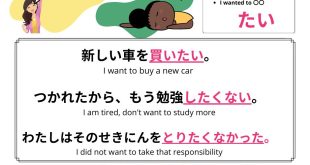
Wanting in Japanese – 4 Essential Grammar Patterns! Tired of only saying “すき”? Want to express what you or someone else wants clearly and naturally? These slides break down the most useful expressions for showing desire in Japanese. 1. 〜たい Use when you want to do something. 新しい車を買いたい。(I want to …

Read More »

Japanese Grammar: 〜のに = in order to

Japanese Grammar: 〜のに = in order to It’s a super handy structure that can mean both “in order to” and “even though”, depending on the sentence! 💡 Grammar: 〜のに Verb dictionary form + のに = In order to [verb] It can also mean “even though / despite” in a different …

Read More »

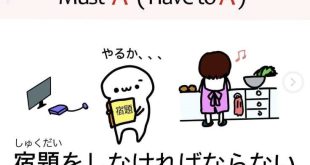
Japanese Grammar: 〜なければならない = must / have to

Today we’re covering an N4-level grammar pattern you’ll hear a lot in formal settings: 〜なければならない = must / have to 💡 Grammar Breakdown: ✅ Verb in ない-form (remove い) + ければ + ならない ➡️ Used to express obligation or something that must be done. 📝 Examples from the images: 牛乳を買わなければならない。 …

Read More »

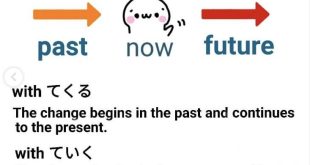
Japanese Grammar: 〜てくる / 〜ていく = Time

Japanese Grammar: 〜てくる / 〜ていく = Time Let’s talk about how things change over time in Japanese using two powerful expressions: 〜てくる & 〜ていく! 💡 〜てくる 🔹 Structure: Verb (て-form) + くる 🔸 Used when a change started in the past and is continuing to the present. 📘 Examples from …

Read More »

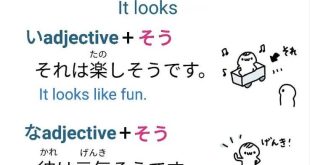
Japanese Grammar: 〜そう = It looks / seems…

Japanese Grammar: 〜そう = It looks / seems… Let’s level up your Japanese by learning how to describe how things look or seem! This pattern is super useful for everyday conversation! Grammar: 〜そう We use 〜そう to express how something appears based on what we can see or feel. How …

Read More »

Japanese Verb Conjugation: The Passive Form

Japanese Verb Conjugation: The Passive Form The passive form 受身形 (うけみけい) is used to describe actions that happen to the subject, often beyond their control. In Japanese, it’s commonly used to: – Indicate that someone or something is affected by an action. – Describe events or situations where the actor …

Read More »