 Learn Japanese
Verb Conjugation cheat in Japanese Related Post: How to make Verb て-form in Japanese Japanese Verb Conjugation: The Passive Form
Read More »Verb Conjugation cheat in Japanese
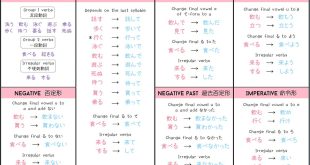
Verb Conjugation cheat in Japanese Related Post: How to make Verb て-form in Japanese Japanese Verb Conjugation: The Passive Form
Read More »
The difference between ここ, そこ and あそこ ịn Japanese 🟢 ここ (koko) – Here Near the speaker. Like これ (this). Example: ここにいます。 Koko ni imasu. → I am here. 🟡 そこ (soko) – There Near the listener. Like それ (that near you). Example: そこに本があります。 Soko ni hon ga arimasu. → …
Read More »
The difference between です and ます in Japanese Feature です (desu) ます (masu) Used with Nouns & Adjectives Verbs Meaning “to be” (is / am / are / exists) Polite verb ending Can stand alone? ✅ Yes ❌ No Polite → Casual です → だ ます → dictionary/plain form Past …
Read More »
The difference between だが and ですが in Japanese What’s the difference between だが and ですが in Japanese ? Related Post: Japanese Grammar: Potential Form Japanese Grammar: Volitional Form
Read More »
Japanese Grammar: AはBです Grammar lesson for beginners Related Post: Ru-verbs and U-verbs in Japanese JLPT N3 Grammar List
Read More »
The difference between たら and ても in Japanese Do you know what’s the different between たら and ても in Japanese ??. Related Post: Learn JLPT N5 Grammar: Part 1 JLPT N4 Grammar List
Read More »
Japanese Grammar: A は B ではありません Grammar lesson for beginners. Related Post: How to use とおもいます in Japanese Learn how to use あります/ います in Japanese
Read More »
Ru-verbs and U-verbs in Japanese Let’s learn what’s differentiate between Ru-verbs and U-verbs in Japanese. Hope it works for you . Related Post: How to make Verb te-form in Japanese Japanese Verb Conjugation: The Passive Form
Read More »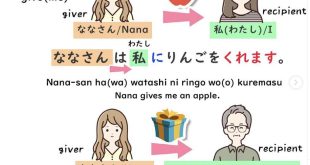
Giving and Receiving in Japanese くれます (kuremasu) = someone gives me/us もらいます (moraimasu) = I receive あげます (agemasu) = I give to others These verbs can be tricky, but once you get them, your Japanese will sound so much more natural Japanese vocabulary related to giving and receiving お歳暮 【お・せい・ぼ】 …
Read More »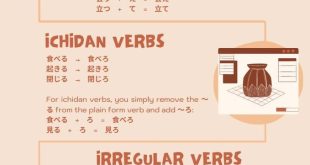
How to Make Commands and Requests in Japanese Let’s talk about one of the strongest verb forms in Japanese: the 命令形 (めいれいけい) – the Command Form! Is a verb conjugation that changes verbs into commands, orders, and demands. As you can imagine, it is pretty strong and not exactly super …
Read More »