Learn Japanese
JLPT N4 Particles
JFT A2, JLPT N4 Particles
Learn JLPT N4 Particles
I. Case Particles(格助詞 – kaku-joshi)
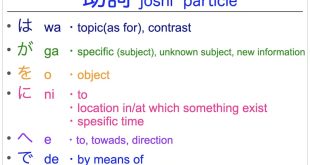
These particles follow nouns and indicate their grammatical role in a sentence (subject, object, etc.).
| Particle | Example | Meaning / Function |
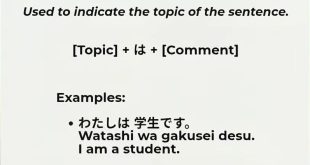
| は (wa) | 私は学生です。(I am a student.) | Topic marker |
| が (ga) | 猫が好きです。(I like cats.) | Subject / object focus |
| を (wo / o) | ご飯を食べる。(Eat rice.) 本を読む。(Read book.) |
Direct object |
| に (ni) | 学校に行く。(Go to school.) | Direction, time, indirect object |
| へ (e) | 東京へ行く。(Head toward Tokyo.) | Direction (focus on destination) |
| と (to) | 彼と話す。(Talk with him.) りんごとみかん (Apples and oranges) 何と読みますか。(How do you read it?) |
Accompaniment, quotation, condition |
| で (de) | 公園で遊ぶ。(Play at the park.) 鉛筆で書く。(Write with a pencil) 野菜で作る。(Made with vegetables) |
Location, means, material, tool |
| から (kara) | 学校から帰る。(Return from school.) 読めないから書けない。(I can’t write because I can’t read.) |
Starting point, reason |
| まで (made) | 駅まで歩く。(Walk to the station.) | Endpoint |
| より (yori) | 彼より速い。(Faster than him.) 日本より南は暑いです。(The areas south of Japan are hotter.) |
Comparison, starting point |
2. Conjunctive Particles(接続助詞 – setsuzoku-joshi)
Connect clauses or sentences.
| Particle | Example | Meaning / Function |
| から (kara) | 雨だから行かない。 (I won’t go because it’s raining.) |
Reason, cause |
| ので (node) | 忙しいので行けない。 (I can’t go because I’m busy.) |
Reason (softer tone) |
| が (ga) | 雨が降っているが行く。 (It’s raining, but I’ll go.) |
Contrasting conjunction |
| けれど(も)(keredo / mo) | 疲れたけれど楽しかった。 (I was tired, but it was fun.) |
Concession |
| ても (temo) | 雨が降っても行く。 (I’ll go even if it rains.) |
Conditional (opposing result) |
| のに (noni) | 晴れているのに寒い。 (It’s sunny, but cold.) |
Unexpected result (emotional tone) |
| たら (tara) | 食べたら寝る。 (If I eat, I’ll sleep.) |
Condition (can also mean time) |
| ば (ba) | 行けば会える。 (If I go, I can meet them.) |
Condition |
3. Adverbial Particles(副助詞 – fuku-joshi)
Add nuance or emphasis to a sentence.
| Particle | Example | Meaning / Function |
| も (mo) | 私も行く。 (I’ll go too.) |
Inclusion |
| だけ (dake) | 一人だけ来た。 (Only one person came.) |
Limitation |
| しか (shika) | 彼しか知らない。 (Only he knows — with negation) |
Exclusive (used with negation) |
| ほど (hodo) | 驚くほど速い。 (So fast it’s surprising.) |
Degree |
| くらい / ぐらい (kurai / gurai) | 一時間くらい待った。 (Waited about an hour.) |
Approximation, slightness |
| さえ (sae) | 水さえない。 (There’s not even water.) |
Emphasis |
| まで (made) | 雪まで降った。 (Even snow fell.) |
Extending scope |
| でも (demo) | 子供でもできる。 (Even a child can do it.) |
Example, emphasis |
4. Sentence-ending Particles(終助詞 – shū-joshi)
These appear at the end of sentences and convey the speaker’s attitude or interaction with the listener.
| Particle | Example | Meaning / Function |
| ね (ne) | 行くよね? (You’re going, right?) |
Seeking agreement or confirmation |
| よ (yo) | 行くよ! (I’m going!) |
Assertion, emphasis |
| か (ka) | 行くか? (Are you going?) |
Question or challenge |
| な (na) | 行くな。 (Don’t go.) |
Prohibition, emotion, command |
| の (no) | 行くの? (Are you going?) |
Question (softer tone) |
| ぞ / ぜ (zo / ze) | 行くぞ! (Let’s go!) |
Masculine emphasis |
| わ (wa) | 行くわ。 (I’m going.) |
Feminine tone, mild assertion |
Related Post:
How to use 17 Particles in Japanese
List of 188 Japanese Particles